
Q&A: Japan Foundation Touring Film Programme
.jpg)
A Q&A with HOME's film programme producer...
The UK’s largest festival of Japanese cinema, the Japan Foundation Touring Film Programme, is back.
Which means that nine totally unique Japanese films will screen at HOME between 12 Feb-10 Mar.
To mark its launch this week, we spoke to HOME’s resident film programme producer Phil, to learn a little more…
Q: In a nutshell, what does this film festival entail?
Phil: It’s a rare opportunity to immerse yourself in Japanese cinema.
Our 2026 edition is our biggest edition ever. We are screening 9 different films, trying to cover as many genres, styles, tones as possible – and we also have one in-person Q&A.
Q: What are popular trends happening in Japanese cinema right now?
Phil: One big theme is a distrust of systems of power, or an examination of the Japanese state – particularly the social welfare state.
This year, our programme includes two films about government officials who get wrapped up in something bigger than themselves.
A Bad Summer is about a welfare officer who tries to intervene in wrongdoing within the welfare department, but then becomes complicit within it.
And ANGRY SQUAD: The Civil Servant and the Seven Swindlers, which is a much lighter film, is a comedy-thriller about a tax official who ends up joining forces with a group of con artists to bring down a property tycoon.
So I think one recurring theme we can identify in these films that discomfort around systems of power within the Japanese state. Both films highlight that those systems (or individuals within those systems) can be subject to corruption or fallibility. And, for filmmakers, there's dramatic potential in that.
.jpg)
Picture: ANGRY SQUAD: The Civil Servant and the Seven Swindlers (18)
Q: And other notable themes that stand out?
Phil: One of the other things we've seen over the past few years in Japanese cinema is films that look at ageing in interesting ways. Films that consider the end of life, mortality and what it means to have led a good or a bad life.
Teki Cometh is a film about a retired literature professor, nearing the end of his life. He lives a very rigid, ritualistic lifestyle where he does the same thing every day.
He cooks these complex meals and keeps his house very clean. He sticks strictly to a select few social appointments. And he takes satisfaction in that routine.
But then the structure he's built starts to unravel, and he starts receiving unusual messages that cause him to reflect on his life and the choices he’s made.
In principle, the set-up is relatively similar to Perfect Days, which was a really popular film here at HOME a couple of years ago. But Teki Cometh takes its meditation on ageing in a much darker direction.
Q: Why do you think ageing is a theme in Japanese cinema right now?
Phil: Like a lot of countries, Japan has an aging population. Socially and culturally, they’re trying to come to terms with this challenge. Any social issue like that will eventually become an artistic and a cultural issue.
So we’re seeing artists and filmmakers in Japan taking that social reality and addressing it in really interesting and diverse ways in cinema.
Q: Which films in the programme are you most excited to watch?
Phil: The first one is Blue Boy Trial, which is the season opener. There's a few different reasons why I'm excited by this one. First of all, the filmmaker is coming to do a Q&A. It’s a really rare privilege to have an international artist visiting us.
Blue Boy Trial is interesting because it throws a light on a legal case from the 1960s, which brought trans visibility into the mainstream in Japan. And the nature of the case means that, in a way, it's really specific to Japan.
And yet anyone who's interested in trans rights and LGBTQ history can come to this, and as much as they'll learn something specific about Japanese trans history, what they'll probably take away from it is that they have much more in common with this Japanese story than they might have imagined.
My next recommendation is Ghost Killer.
This has got the best one-line synopsis in the whole season: "The ghost of a dead hitman possesses a university student to exact revenge". That's it.
If you only have 10 seconds to pitch a film, that is me sold. This one's really cool.
.jpg)
Picture: Ghost Killer (18)
Q: A ghost hitman? Tell us more…
Phil: Ghost Killer feels like part of a recent renaissance in action movies. With the rise of CGI, there was a period where it felt like action films had lost part of their soul; their sense of reality and of the visceral.
In that context, Ghost Killer is a great showpiece for action choreography.
It celebrates the technique that goes into making real action movies, rather than just relying on CGI.
The filmmaker Kensuke Sonomura was originally a stuntman. He then became a fight coordinator and has now moved into directing. You can see his love for the craft of the stunt performer coming through in this film.
In East Asian cinema, the role of stunt performers and action choreographers has always been respected. It feels like Western cinema has only really started to reconnect with this side of moviemaking with films like the John Wick franchise.
Q: Any films on the line-up from directors we might already know about?
Phil: Yep, ANGRY SQUAD: The Civil Servant and the Seven Swindlers.
This one is exciting because some HOME visitors might remember One Cut of the Dead, a zombie comedy which came out in 2017. It was this DIY, super low-budget film that managed to really punch above its weight around the world.
ANGRY SQUAD: The Civil Servant and the Seven Swindlers, is the latest project from the same filmmaker, Shinichiro Ueda.
In this film, he's got a bigger budget, a bigger canvas to play with, but he has still retained his fairly eccentric, madcap filmmaking style.
It’s exciting to see a filmmaker like that given free rein to make a fairly mainstream, accessible piece of entertainment - that retains the independent spirit that makes their work special.
Q: What’s on offer for horror fans?
Phil: We’re screening Missing Child Videotape: a new film that’s really steeped in that old school J-horror vibe.
The executive producer of Missing Child Videotape is Takashi Shimizu, who made The Grudge, which is a J-horror classic from the early noughties. This film, which is from a debut filmmaker, feels like a new generation taking up the mantle of those filmmakers who put J-horror on the map for Western cinema audiences around the turn of the 21st century.
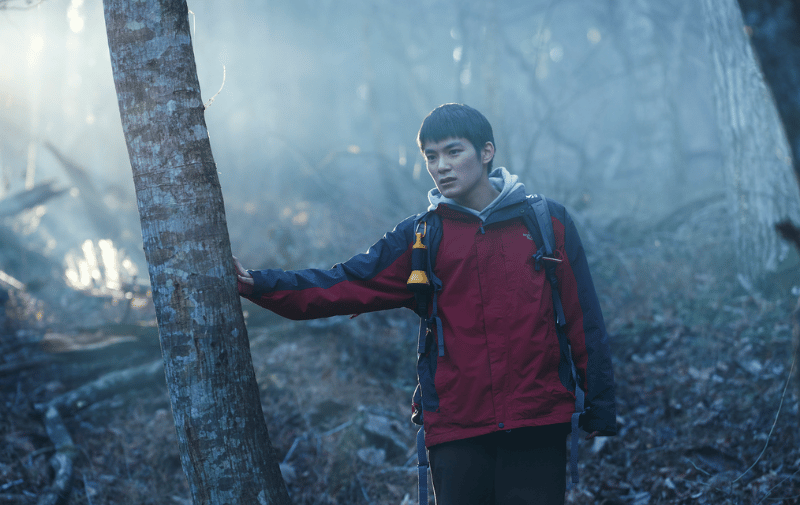
Picture: Missing Child Videotape (18)
Q: How exactly does J-horror differ to say, Hollywood horror?
Phil: J-horror is predominantly psychological. The genre really leans into the idea that ghosts or spirits are the product of a real-world trauma that remains unresolved.
So there's not just a monster under the bed for no reason. Typically, you’ll find that the antagonist in a J-horror is a manifestation of the protagonist’s psychology; a deep-seated fear or a moment from their past.
Missing Child Videotape is very much aligned with that tradition. It’s a film that sets out to create a creeping sense of unease in order to disturb the viewer - rather than just shocking them with violence or a jump cut or anything as explicit as that.
Q: Why do you think audiences will enjoy this programme?
Phil: Firstly: Japanese culture is really popular and hugely influential.
Japan is one of the biggest tourist destinations in the world. People in the UK are fascinated by Japanese culture.
But while there are those aspects of Japanese culture that are well-known – like the pop music, the food, the video games – what’s less familiar is the local background, the specific social and historical contexts, that Japanese culture emerges from.
The best tour guide to anywhere is usually someone who’s local – and that’s basically what the Japan Foundation Touring Film Programme is. It’s a collection of stories from local people showing you around different corners of Japan that you’d never find on your own.
Secondly: Japanese cinema is great!
There's a rich history of Japanese cinema, but relatively few Japanese films are screened in UK cinemas each year. There's just not that many opportunities to see it day-to-day in UK cinemas. So, this programme is a really exciting opportunity to address that lack.
Dive into Japanese cinema...
Tap below to browse the full line-up and experience the best of Japanese film: