
Selecting films for Horizons Festival
A closer looker at the film selection process for Horizons Festival
Horizons Festival returns for 2026 with a newly expanded film programme exploring the complex human experiences of migration and displacement through vibrant, insightful films from across the globe, all voted for by a panel whose own lives have been impacted by migration.
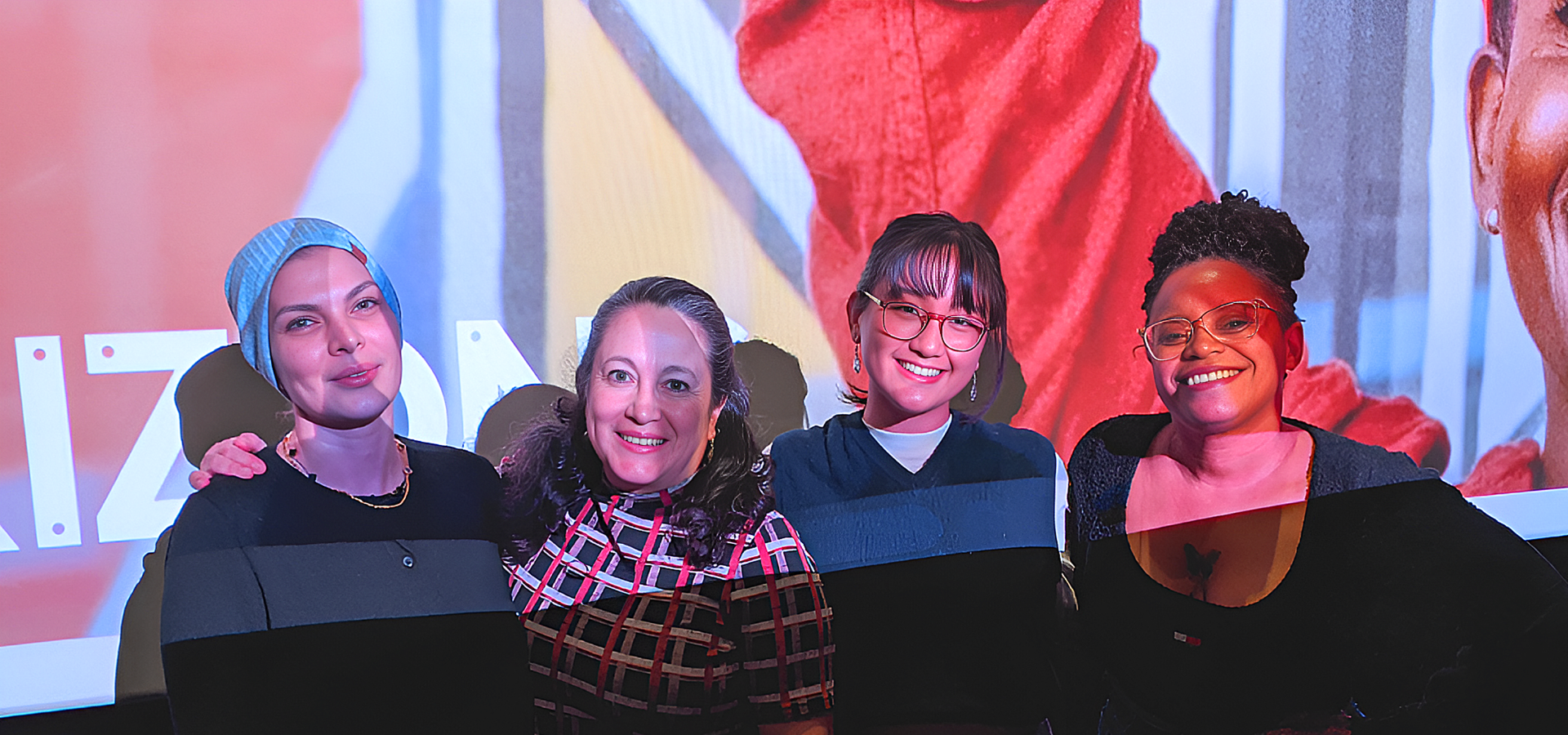
Nuala Shaar, Horizons Film Programme Producer, discussed this careful process, what the team hoped to achieve and everything they are rallying against with this year’s selection panel: Maryam Nazari, Ana Lucía Cuevas, Linnae Yllane and Tina Ramos Ekongo. Working from an initial pool of films, they analysed, debated and championed the final programme together.
Read on to find out what they had to say!
Q&A with the Horizons 2026 film panel
Q) Nuala: It’s been such a wonderful, energising and inspiring process to collaborate with you all on this. Could you please share a bit about yourselves?
Maryam: I am an Iranian-British actress and film-maker, working in theatre and film. Living between cultures has shaped the way I see stories, identity and belonging.
Lucía: I grew up in Guatemala during the civil war; I was forced to leave in 1984 after my relatives were captured and murdered by the military regime. Since then, I’ve worked for justice for my family, as a graphic artist, film-maker and ceramicist.
Linnae: I’m an artist, writer, director and performer, based between Manchester and London. I emigrated at a young age from the Philippines, with my parents.
Tina: I was born in the only Spanish-speaking country in Africa. I grew up in Spain; my family moved there when I was 7, and I moved to the UK in 2011.
Photo by Nuala Shaar
Q) Nuala: As a group, you embody such crucial, varied perspectives, which has been extremely valuable. What made you want to be a part of this process?
Tina: Horizons Festival offers a unique opportunity to bridge the gap between creative storytelling and social discourse. My interest comes from the chance to change peoples’ perceptions, from viewing migration as a crisis to recognising it as a human experience.
Lucia: I am passionate about moving images. I also value collaborative work, and am inspired by the sharing and discussion of ideas.
Maryam: I was interested in joining the panel because film has a powerful role in shaping how we understand migration, identity and belonging.
Linnae: I wanted to learn how to strike the balance of attracting new audiences whilst keeping migrants, and the chance for them to see themselves represented on-screen, at the heart of our decisions.
Q) Nuala: When we started, I suggested around 35 films for you to choose from. That’s a lot of films! Can you say a bit about how you decided which ones made the cut?
Lucía: We aimed to work towards a balanced representation of the different sections of our global community, locally and internationally.
Maryam: We looked for films that avoid stereotypes and offer thoughtful, authentic representations of people’s lived realities.
Linnae: I put strong emphasis on understanding how a director’s identity may have impacted the crafting of the film. Collating public reviews across sites like Letterboxd and IMDb was an invaluable tool for gaining a deeper knowledge of a film’s reception.
Tina: Focusing on diverse perspectives requires moving beyond traditional Eurocentric narratives to prioritise agency, authenticity and intersectionality.
Q) Nuala: Well said! I enjoyed our discussions immensely, especially how much we focused on prioritising empowering, uplifting stories. What did you take away from those conversations?
Maryam: I wanted to contribute my understanding of storytelling, visual language and the creative process behind films. I really valued the respectful discussion, and everyone’s thoughtful analysis.
Linnae: Yes, I believe care should be at the forefront when talking about someone’s work. Because of my own experience as a 1.5 generation immigrant, I wanted to advocate for migrant stories focusing on lost relationships with familial cultures, and the intergenerational effects of migration.
Lucía: I brought my knowledge of participating in similar collaborative projects in the past, like the Climate Justice Curatorial Panel at Manchester Art Gallery. I’ve learnt that sometimes it’s helpful to play Devil’s Advocate!
Tina: The process required a real balance of artistic appreciation, social awareness and logistical judgment. I tried to blend this with my personal experiences of migration, to identify authentic narratives.
Q) Nuala: Speaking of authenticity, we also spoke a lot about combatting stereotypes and harmful misconceptions. What do you wish people better understood about migration?
Linnae: I’d like people to know that there is no straight blanket migrant story; there are so many reasons why people leave their homelands, and not all journeys look the same. It’s not all traumatic struggle. There is so much kindness and solidarity within migrant communities.
Tina: That migration is not always a one-way trip, but rather a process of ‘coming and going’. I want people to realise, whilst many can often travel freely, those from the Global South face almost impossible standards to move legally.
Lucía: The message that the establishment and the far right promotes about migrants is based in untrue statements. It’s very important for the public to understand the causes of migration and the responsibility that the industrial countries, the non-Global South emporiums, have.
Maryam: Behind every story, there are emotions, memories, losses and hopes for the future. Migration often means rebuilding a sense of home whilst carrying pieces of another place within you.
Q) Nuala: That’s beautifully put. Aside from the brilliant films we’ll be screening at HOME, what are some others depicting migration that have stayed with you?
Lucía: For Sama is the story of a Syrian journalist who’s part of the uprising. This film made a big impression on me for various reasons; as a woman, she represents the thousands of female warriors often excluded from official narratives.
Tina: Jumping the Fence, a Spanish movie from 2014. It's a social and political film that depicts present-day issues of immigration and the tragedy faced by those attempting to cross borders.
Maryam: All the films that show migration through small, personal moments. I connect with stories that explore memory, identity and the feeling of living between cultures.
Linnae: Minari is a nuanced and complex story about the pressures families face when moving to the West. Though they go through many hardships, the film is ultimately about hope, that the second generation will see the fruits of their predecessors.
Q) Nuala: And what is it about these stories that, for you, makes them feel especially real?
Maryam: Films that focus on everyday human experiences: language, family relationships, the search for belonging. These kinds of stories feel the most honest.
Linnae: For me, the most impactful representations are of matriarchs; of the strains that Asian women are often made to endure due to patriarchal and religious pressures. The minari plant represents how migrant families must root themselves despite the conditions not being built for them.
Q) Nuala: That’s such a profound, touching symbol of resilience. Okay, conversely: what sort of depictions do the most damage, in your opinion?
Tina: The blatantly hateful rhetoric you hear from the media.
Maryam: It’s harmful when migration is portrayed in a simplified or stereotypical way; reduced to numbers, victims or political problems. That ignores the complexity of people’s lives and the diversity of their experiences.
Lucía: Like the Brexit Campaign in 2016. That process was extremely painful to witness. The consequences of disinformation have been devastating for relations between different sections of our society.
Linnae: I used to love the Pirates of the Caribbean films. However, on a recent re-watch, I noticed the unsavoury side; they glorify the white, British protagonists whilst demonising and butchering the native characters, depicting them as dirty, barbaric canon-fodder.
Q) Nuala: Which is exactly what we sought to reject. I know we’ve spoken about this at length, but why do these portrayals matter so much?
Maryam: Real migration stories are rarely only about suffering; they also include resilience, creativity and adaptation. When media or culture presents migrants only through crisis narratives, it creates distance and misunderstandings.
Tina: The human impact of harsh, anti-migrant policies often creates more suffering. A major misconception is that migrants are a burden. In reality, migrants often fill crucial labour shortages in healthcare, agriculture and hospitality.
Q) Nuala: Absolutely, and we have to do everything we can to combat that dehumanisation, and to replace it with the celebration of our shared humanity. Finally, when people watch these films for Horizons, what do you hope they take from them?
Linnae: I hope people see the bravery in those who migrate to try to make a new life.
Lucía: We must raise awareness about what is happening in the Global South, and I believe in the power of film as a tool to educate, transform and move audiences.
Tina: I want to make our community inclusive and to create space for necessary conversations about the world we want to live in.
Maryam: Films help audiences develop empathy beyond headlines and statistics. I’m so glad to have been able to contribute and to learn from the perspectives of everyone involved.
Linnae: It’s been so exciting to be part of this amazing festival. We wanted to showcase migrant joy!
Nuala: I couldn’t agree more, what a perfect note to end on. I can’t wait to see you all at the festival, hopefully along with many of HOME’s blog readers as well!